Rabbi Jeremy Gerber | How Hebrew Language Shapes the Way We Read Sacred Texts
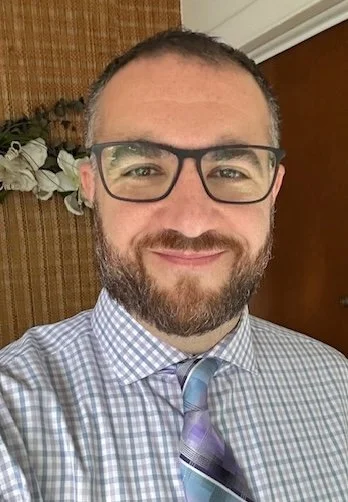
Rabbi Jeremy Gerber
Most English speakers encounter the Hebrew Bible through translation. They read a polished sentence and assume it captures the original meaning. Rabbi Jeremy Gerber argues that something essential gets lost in that transfer, not because translators are careless, but because Hebrew operates on principles that English simply does not share.
Hebrew is a root-based language. Most words derive from three-letter roots that carry a core concept across different grammatical forms. The root sh-l-m, for example, generates words for peace, wholeness, completion, and payment. When a reader encounters any of those words in a biblical passage, the others hover nearby. That layering is invisible in English.
Rabbi Jeremy Gerber Wallingford Pennsylvania congregants encountered this firsthand during his years leading Congregation Ohev Shalom. He would pause on a single verse during Torah study and trace a root through multiple appearances in the text. Suddenly a familiar passage opened into something richer. People who had read the same Torah portion for years found themselves noticing patterns they had never seen.
What Gets Lost Between Languages
Translation forces a choice. Where Hebrew holds multiple meanings in a single word, English must pick one. The word "davar" means both "word" and "thing" in Hebrew. When God speaks, the boundary between language and reality blurs. That tension disappears the moment a translator selects one definition.
Rabbi Jeremy Gerber points to verb tenses as another fault line. Biblical Hebrew does not map neatly onto past, present, and future the way English does. Its verbal system focuses on whether an action is complete or ongoing. This creates ambiguity that commentators have debated for centuries, and that ambiguity is often where the deepest insights live.
Reading in the original forces a kind of patience. You cannot rush through a Hebrew sentence the way you might scan an English paragraph. Every word carries weight, and many carry surprise. That pace is itself a form of discipline, training the reader to slow down and pay attention rather than extract a summary.
Why This Matters Beyond the Synagogue
The implications extend past religious study. Anyone working with translated texts faces the same structural problem. Legal documents, poetry, diplomatic agreements: meaning shifts when it crosses languages. Rabbi Jeremy Gerber uses Hebrew Bible study to illustrate a broader point about careful reading and the assumptions we carry into every text we encounter.
When you slow down enough to ask what a word meant in its original context, you start reading differently everywhere. You notice assumptions. You catch places where convenience replaced precision. That skill transfers to contracts, news articles, and conversations where precision matters.
Rabbi Jeremy Gerber has taught this approach for years, both in Wallingford, Pennsylvania, and through broader educational settings. His fluency in Swedish adds another dimension. Growing up trilingual in Stockholm gave him an early awareness that every language carries its own logic, and that moving between them is always an act of interpretation rather than simple substitution.
The Invitation to Read More Carefully
You do not need to be fluent in Hebrew to benefit from this awareness. Even knowing that a translation made choices on your behalf changes how you engage with a text. It introduces healthy skepticism, not toward the text itself, but toward the assumption that you already understand it fully.
Rabbi Jeremy Gerber suggests starting with a single word. Pick a term that appears repeatedly in a passage. Look up its root. See where else it shows up in the Bible. That small exercise can shift an entire reading from surface to depth, and it often raises questions that sustain weeks of further study.
The Hebrew Bible was not written to be skimmed. It was written to be studied, questioned, and revisited across a lifetime. Language is the first door into that process, and Rabbi Jeremy Gerber has spent his career showing people how to open it.